How Experiential Education and Adventure Pedagogy Redefined Our Approach to Learning
In June 2026, our delegation of four youth workers from Armenia embarked on a profound
professional journey to Germany. We left behind traditional learning spaces to participate in the
Erasmus+ youth worker training course, “The Mountain Speaks for Itself”. Organized by the
recognized child and youth welfare organization Fahrten Ferne Abenteuer – Abenteuerzentrum
Berlin, this intensive 10-day exchange was meticulously aligned with the European Training
Strategy (ETS) model.
Bringing together passionate youth workers from Germany, Italy, Turkey, Serbia, Slovakia,
Romania, and Armenia, the project served as a living laboratory for experiential education. For
over a week, our home was KiEZ Hölzerner See in Heidesee, Brandenburg—a stunning education
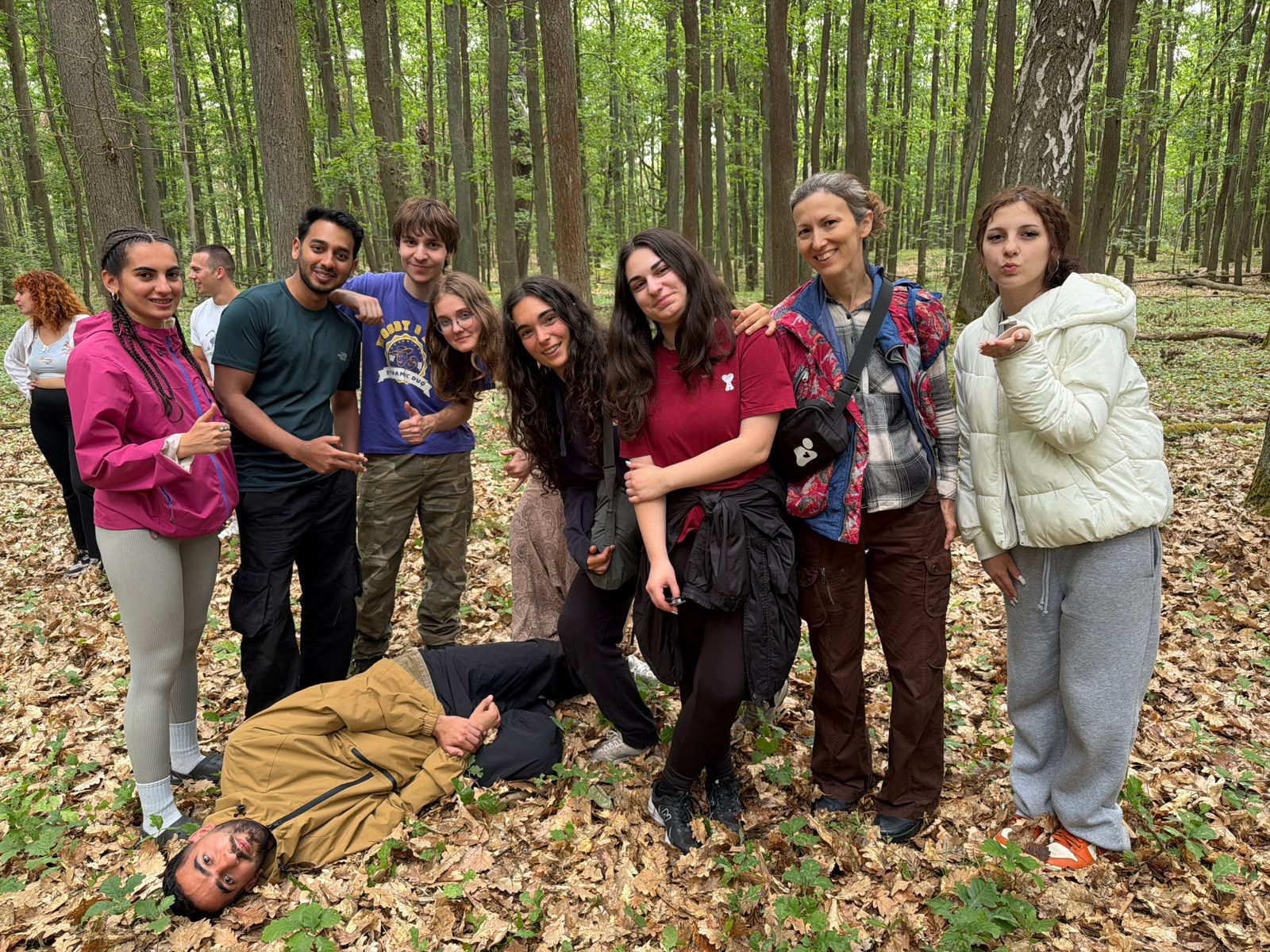
center tucked deep inside the forest, bordered by a private lake. Living fully immersed in nature,
sleeping in individual tents, and gathering around a nightly campfire, we didn’t just study nonformal education; we lived it.
1. Living the Methodology: Action, Reflection, and the Learning Zone
The absolute core of our training was a strict adherence to the Experiential Learning Cycle: the
principle of action and reflection. In traditional education, theories are memorized. In adventure
pedagogy, an experience is engineered to push participants out of their comfort zones, and
structured reflection is used to harvest deep educational takeaways.
- As a team, we constantly evaluated our mindset using the Learning Zone Model:
- The Comfort Zone: Where things are safe, familiar, but no new learning occurs.
- The Learning Zone: The optimal space where outdoor challenges stretch our
- capabilities, forcing us to adapt, communicate, and grow.
The Panic Zone: Where stress becomes overwhelming and learning stops.
Every daily session—structured from 9:30 AM through the late afternoon—was systematically
designed to keep us operating in that vital “Learning Zone”. We discovered firsthand how
cooperative adventure games serve as a medium for sustainable character development,
democratic work, and gender equality. By understanding the natural group development phases,
we learned how to steer a room of strangers through initial hesitation, inevitable friction, and
ultimately, high-performing collaboration.
2. Navigating the Water Days: Trust, Raft Building, and Canoeing
The ultimate practical test of our group dynamics occurred during the highly anticipated “Water
Days”. Our international cohort was broken into teams and handed raw materials with a singular
instruction: build a structurally sound raft from scratch and navigate it across the lake.
For our Armenian delegation, this challenge became a masterclass in intercultural
communication and team building. We had to negotiate building strategies under time pressure
with peers from entirely different cultural and linguistic backgrounds. It required us to navigate
conflicting ideas, practice active listening, and delegate tasks based on individual strengths.
The moment our handmade raft finally hit the water of the Hölzerner See and held our collective
weight, the sense of triumph was electric. We followed this victory by practicing canoeing and
rafting, learning to read the water and coordinate our movements. The metaphor for youth work
was crystal clear: in any community or organization, an individual cannot move forward
effectively if the entire team is not paddling in perfect sync.
3. Mastering the Camp: Tents, Resilience, and Shared Responsibilities
Living outside on the camp space meant that our education extended far beyond the scheduled
training hours. For many of us, sleeping in individual tents was a brand-new adventure in selfreliance. We quickly learned the practical mechanics of outdoor survival, starting with how to
properly pitch and secure our own tents so they could withstand the elements.
This environment truly tested our adaptability when the weather shifted. We learned firsthand
what to do when it rains: how to dig small trenches to divert water, keep our gear perfectly dry
off the tent floor, and maintain a positive mindset despite damp conditions. Dealing with the
elements together didn’t dampen our spirits; it built immense personal grit and showed us how to
manage unexpected crises with calm logic.
Furthermore, community living required a high level of shared responsibility. We implemented
daily cooperative duties where everyone contributed to maintaining our living space. We took
turns cleaning the shared areas, managing the campfire zone, and keeping the camp tidy. This
division of daily chores wasn’t just practical—it was a lesson in accountability and communal
ownership, proving that a smooth-running community relies on the unseen contributions of every
single member.
4. Precision and Focus: Archery and Slacklining as Media
Among the diverse non-formal tools we explored, our practical training in archery and slacklining
stood out as incredible educational media.
During the archery lessons, we didn’t just learn the physical mechanics of how to hold a bow,
notch an arrow, and shoot accurately at a target. We analyzed archery as a tool for mindfulness
and psychological focus. It taught us how to control our breathing, find our anchor point, and
quiet external distractions.
Similarly, slacklining became a physical metaphor for balance and resilience. Walking across a
narrow, shaking line requires total body awareness and the willingness to fall and get right back
up. Through these specific media, we learned how to debrief physical activities to teach youth
about goal-setting, self-discipline, and finding inner balance when facing high-pressure
challenges.
5. The City as a Classroom: Berlin City Bound Tasks
On Day 6, the project flipped our environment entirely. We transitioned from the serene, isolated
woods of Brandenburg into the vibrant, chaotic urban center of Berlin for “City Bound” tasks.
City Bound pedagogy treats a major metropolitan area not as a tourist destination, but as a
complex educational landscape. Armed with specific non-formal challenges, we had to navigate
Berlin’s public transportation system, interact creatively with public spaces, and problem-solve
on the move.
As participants coming from Armenia, using a sprawling European capital as our textbook was
exhilarating. Berlin is a deeply historical and resilient city that has rebuilt itself multiple times,
making it the perfect backdrop for exploring personal adaptability and grit. The city’s immense
cultural plurality, sustainability hubs, and vibrant street art scenes showed us how an urban
environment can be leveraged to teach youth about civic engagement, social integration, and
breaking down social anxieties.
6. Shifting Perspectives: From Participants to Experiential Trainers
What truly elevated this Erasmus+ training was its focus on long-term sustainability and
professional empowerment. We weren’t just there to absorb information; we were there to build a
comprehensive pedagogical “toolbox” that we could actively wield.
By the final days of the project, during the “Become an Expert” phase, the dynamic transformed.
The trainers stepped back, and our Armenian delegation—alongside our international colleagues
—had to step forward into the leadership role. We were tasked with designing, executing, and
evaluating our own experiential education programs from scratch.
We drew heavily upon the media we had practiced throughout the week, setting up the
cooperative adventure games, slacklines, and archery ranges ourselves. We had to physically
manage the safety of our peers, control the group dynamics, and most importantly, facilitate the
deep meta-level reflection sessions that followed. Learning how to guide a group from the
background—knowing exactly when to intervene and when to let the participants figure it out on
their own—completely redefined our understanding of what it means to be an educator.
7. Cultural Integration: Campfires and Multicultural Evenings
Learning did not stop when the formal sessions ended at 5:30 PM. The evening hours at KiEZ
Hölzerner See were dedicated to organic, non-formal community building. Every night, the entire
international group gathered around the campfire, sharing traditional songs, stories, and playing
musical instruments brought from our respective home countries.
A major highlight for our team was the Multicultural Activity night. We had the proud opportunity
to present Armenia to our European peers. We shared our rich history, traditional dances, and
brought authentic Armenian flavors to the table. These social evenings allowed us to explore
deep intercultural dialogue in an informal setting, breaking down stereotypes and forging lifelong
cross-border partnerships for future youth work collaborations.
Bringing the Experiential Legacy Back to Armenia
We return home to Armenia transformed. We are not just bringing back memories of sleeping in
individual tents under the German sky, swimming in the lake, or exploring the streets of Berlin.
We are returning with a robust, professionally certified toolkit aligned with European youth work
standards.
The lessons of “The Mountain Speaks for Itself” have shown us that the most impactful learning
does not happen on a whiteboard or through a screen. It happens when young people are given
the space to act, to make mistakes, to navigate a rainy day in a camp, to trust a team, and to
reflect deeply on their experiences.
We are incredibly grateful to the German National Agency Jugend für Europa, the coordinator
Klee Michel, and the entire team at Fahrten Ferne Abenteuer for making this space possible. Our
goal now is dissemination: we are fully prepared to implement these adventure-based, nonformal learning methodologies directly within our local youth spaces, NGOs, and communities
across Armenia, lighting the same spark of experiential learning for the youth we serve back
home.